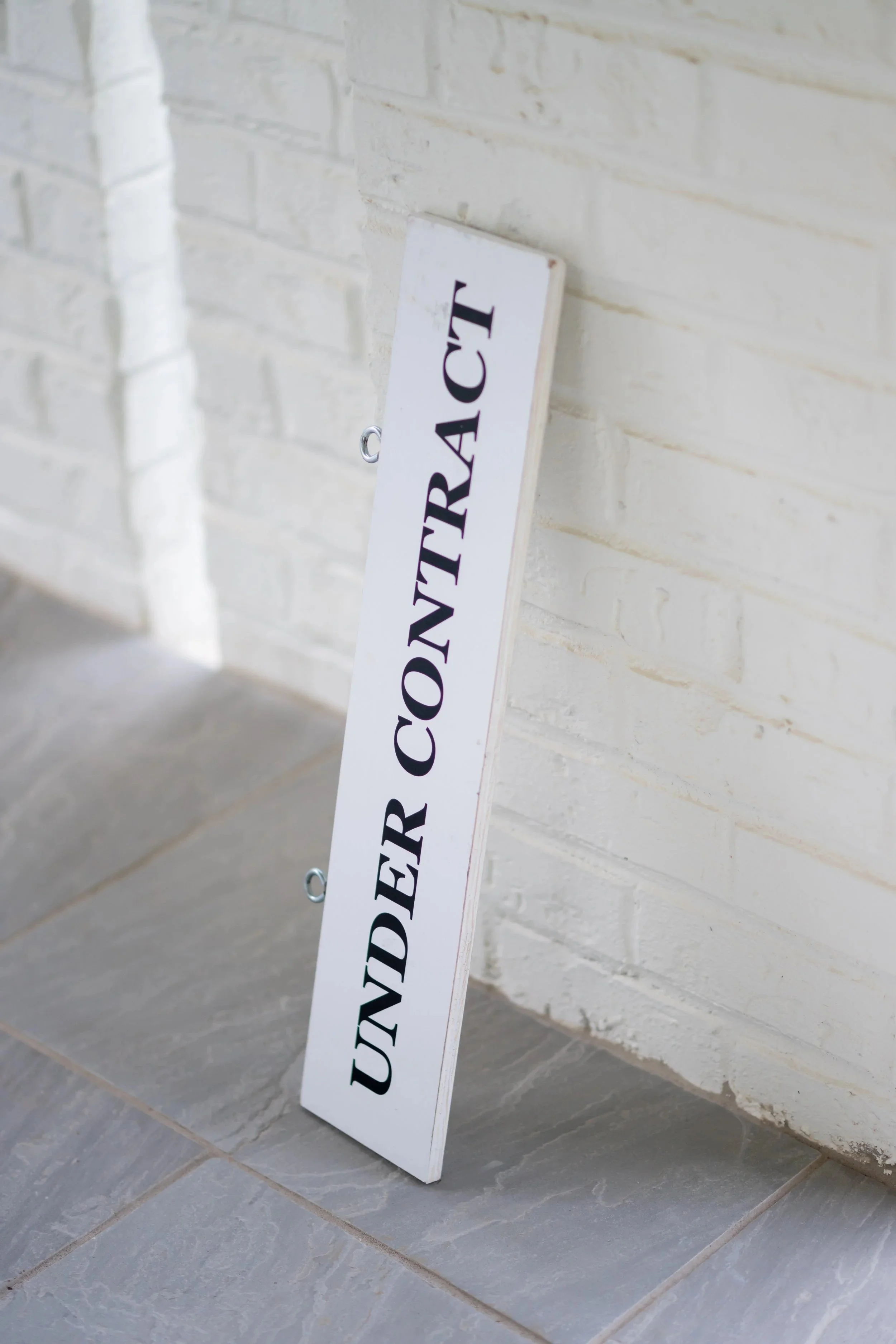
Breaking down the home buying process into 4 stages and 12 steps. Here’s what Atlanta buyers need to know before they start touring homes.
Deciding to buy a home is the first step. Of many.
Then there’s knowing where to begin or what to expect throughout the process, not to mention the pitfalls when you’re navigating a home purchase for the first time.
Buying a Home in Atlanta: What to Expect at Every Stage
Deciding to buy a home is the first step. Of many.
Then there's knowing where to begin or what to expect throughout the process, not to mention the pitfalls when you're navigating a home purchase for the first time.
Between the two of us, we have bought, sold, and renovated nine homes personally. I have done it four times. My business partner Rebecca has done it five. Together we have helped more than 50 families find their way home across Atlanta.
One thing we have learned firsthand, and see again and again with our clients:
Most of the mistakes buyers make happen before they ever set foot in a house.
We break the whole process into 12 steps, and those steps fall into four stages:
Strategy
Search
Contract
Close
Here is what each one looks like if you are buying a home in Atlanta.
Before You Look at a Single Home, Build a Game Plan
The most important work happens before you tour anything. A real game plan comes down to five pieces.
What is actually driving the move? Most of the time it comes down to what we call the 5 Ds: diamonds, diapers, divorce, downsizing, or death.
What you don't want, plus your 3 to 5 must haves. Those are your non negotiables.
Your nice to haves. Mixing these in with your non negotiables just muddies the search.
The 7/10 rule. Decide upfront whether you would rather have the 10/10 house and the 7/10 location, or the other way around.
Which deadlines are locked in, like a lease ending, and which ones have room to move, like new furniture or a future renovation.
Money is usually the part people stress about most, and it settles fast once you answer two questions:
Are you thinking in terms of purchase price or monthly payment?
Are you paying cash or financing?
Cash removes the lender from the equation, which makes your offer look stronger to a seller and gets you to the closing table faster.
Financing takes a few more steps, but it keeps more of your cash free for everything else.
Choosing an Agent and Getting Preapproved
Once you have a game plan, the next move is finding the right agent. Our advice here is to start with a referral from someone you trust, then look for an agent who specializes in the area you are buying into, whether that is Buckhead, Chastain Park, Brookhaven, Sandy Springs, or one of Atlanta's other established neighborhoods.
When you sit down with an agent you are considering, ask them three things:
What is your process for helping clients buy a home?
What are the top five mistakes buyers are making in this market right now?
How do you get paid?
The answers tell you a lot fast. An agent without a clear process is going to leave you guessing at every step, and if they cannot explain their own compensation clearly, that tells you something about how adept they will be when it comes to negotiating on price and other terms.
Once you have picked someone, get preapproved before you look at a single home. Preapproval locks in your financial picture, and it needs to stay locked until closing.
That means holding off on anything that could change that picture until the deal is done:
New car
Job change
New credit card or payment plan, for anything
Any one of those can throw off your approval right when you need it most.
What's For Sale in Atlanta Right Now
Behind what is actively listed for sale, there is a layer of passive inventory: homes that would sell if the conditions were right, even though they are not on the market yet.
In some neighborhoods that passive inventory runs many times the size of what is actually listed, and a good agent can get you into some of it through off market deals and pocket listings most buyers never even hear about.
Before you start touring, talk to your agent about months of supply. That one number tells you how long it would take to sell everything currently on the market if nothing new came up for sale.
Under 5 months, and it's a seller's market.
5 to 6 months, and the market is balanced.
Over 6 months, and buyers have the advantage.
Local data across the entire metro Atlanta MLS footprint shows we are sitting at 4.7 months of inventory, which puts us in seller's market territory, especially in established neighborhoods where new supply stays tight.
That number also shapes how a seller prices their home. A seller might price above what similar homes nearby have recently sold for, an aspirational price, to leave room for negotiating, or price right where similar homes are closing, at perceived market value, to reflect real market value.
Sometimes a seller prices deliberately low, called event pricing, to create competition and spark a bidding war.
Whichever one they are using changes how you should approach your own offer.
Touring Homes, Writing an Offer, and Getting Through Contract
After every showing, ask three questions:
What pricing strategy is the seller using?
Do you see yourself living here?
What is the one thing you would change before making an offer?
That last question is the most important one, and it is easy to see why. Most buyers walk away from a home over something small and fixable, like a paint color or an outdated light fixture.
Naming the one change you would make before writing an offer can save a house that would have gotten crossed off the list and forgotten, when it might otherwise be a great fit.
When you are ready to write an offer, your agent handles three things.
They draft it.
They walk you through every term before you sign anything.
They submit and negotiate it on your behalf.
Once it is in, the seller can accept, reject, or counter it. Rejection is normal and usually comes with feedback you can use.
Countering is the most common response, whether that means a higher price or the seller wanting some sort of trade off, for example maybe they want to keep the washer and dryer.
Once an offer is accepted, the home goes under contract, and this is where buyers start to get nervous. There are three built in outs that exist for exactly this stage.
The inspection contingency lets you walk away over a real problem the inspector finds, and it is also where requests for repairs come from.
The loan contingency protects you if your financing falls through.
The appraisal contingency confirms the home's value matches what you agreed to pay, and gives you two more chances to renegotiate if the number comes in low.
Buyers who understand what these three are for tend to stay a lot calmer through the rest of the contract period. These outs exist so you are not stuck if something goes wrong.
The Final 48 Hours: What Closing Day Really Looks Like
There is real planning to do before closing day shows up.
Handle your address change.
Get the utilities switched over at the new place.
Lock down your moving logistics early so you are not scrambling in the last week.
Then comes the final walkthrough, which confirms two things: the home is in the same shape it was in when you made your offer, and whatever repairs the seller agreed to got done.
The last 48 hours are financially intense, and we are not saying that to be dramatic. Documents get signed, funds move, and keys change hands, all in a pretty short window. When things move that fast, it is normal for it to feel overwhelming.
This is where having an agent who has done this before really pays off, both as a professional and as someone who has personally sat on both sides of the closing table. Catching a problem before closing day is a lot easier than catching it afterward.
None of this has to feel like guesswork once you know what is coming at each stage. If you are thinking about buying in Atlanta, whether this quarter or next year, we would welcome the conversation.
Stafford Weber and Rebecca Kubin | Team Stafford & Rebecca | Compass Atlanta

What Most Sellers Get Wrong About Pricing Their Home
Many sellers believe listing their home as high as possible protects their equity. But that strategy can actually backfire. Here’s how a pricing strategy helps sellers attract buyers and maximize results in 2026.
Every year, right before the spring market kicks off, sellers say the same thing:
“We just don’t want to leave any money on the table.”
And they’re absolutely right. No one wants to sell their home only to wonder later if they could have gotten more.
So what do many sellers do?
They assume the way to protect themselves is to list as high as possible.
In theory, it makes sense. But that strategy can actually backfire.
Pricing matters even more now than it did during the peak years of 2022 and 2023. Buyers have more options, and they’re paying attention to everything: how long a home has been sitting on the market, whether the price has been reduced, and how it stacks up against the home down the street.
And that’s where many sellers run into trouble.
So today, let’s talk about the biggest mistakes sellers are making right now, and how to strategize list price instead.
Mistake #1: Treating List Price Like the Final Sales Price
Many sellers believe the list price is a statement.
Instead, think about it like an invitation.
The final sales price is determined later, after buyers:
View the home
Compare it to others
Compete (or don’t)
Submit offers
Negotiate
When you think of it as an invitation price, it’s easier to see that it simply controls how many people walk through the door in the first place.
Think of it like this:
If the invitation is too high, fewer buyers show up.
Fewer buyers means fewer offers.
Fewer offers means less leverage.
The goal isn’t to “pick the highest number.” The goal is to create positioning that attracts maximum demand.
Mistake #2: Believing Price Alone Determines the Outcome
Another major misconception: “If it doesn’t sell, it’s because the market is slow.”
Sometimes that’s true. But price is part of marketing. It’s one lever in a larger process that includes:
Presentation
Exposure
Timing
Buyer psychology
Negotiation strategy
Homes don’t sell solely because of a number. They sell because the strategy creates urgency and confidence.
When pricing is treated as a one-time guess instead of a strategic decision, sellers lose control of the outcome.
Mistake #3: Pricing Based on Old Comparables
A lot of sellers look at what their neighbor’s home sold for last year and assume that’s today’s value.
But markets shift.
The real story isn’t just what sold. It’s:
How many homes are currently active
How many are going under contract
How quickly they’re moving
When there are more homes for sale and fewer buyers, pricing aggressively can backfire.
When demand is strong and inventory is limited, pricing strategy looks different.
In short, your home doesn’t sell because of what happened 12 months ago. It sells based on what buyers are doing right now.
The 2026 Reality: Buyers Are More Analytical
Today’s buyers:
Compare multiple properties instantly.
Track price reductions.
Watch days on market.
Study past sales history.
If a home sits without activity, buyers assume something is wrong, even when it isn’t.
That’s what a home that starts too high often ends up selling for less than it would have if it had been positioned correctly from day one.
Momentum matters.
So, How Should Sellers Think About Pricing?
Instead of asking: “How high can I list?”
Ask: “What pricing strategy will create the strongest position in today’s market?”
There are generally three approaches:
Aspirational Pricing: Starting high and testing the market. This can work for rare or highly unique homes, but often requires adjustments.
Market-Positioned Pricing: Pricing in line with current competition to attract steady, predictable activity.
Event-Based Pricing: Pricing to generate maximum attention early and create competitive momentum.
The right strategy depends on:
Your timeline
Your goals
Current local inventory
Buyer demand in your price range
Final Thought
The best deal for a seller is one that meets their goals while protecting their equity. That includes the price, of course, but also the terms of the offer, the likelihood of a smooth inspection, a clean appraisal, and the chances of the deal closing without constant renegotiation.
Sometimes that surprises sellers, especially when the highest offer isn’t the strongest one.
For example, if a homeowner needs to move quickly, a slightly lower cash offer with a fast closing can be far more appealing than a higher financed offer that comes with a longer timeline and more uncertainty.
In other words, success isn’t just about chasing the biggest number. It’s about choosing the strategy that gets you the best result. And that’s especially true in today’s market.
In 2026, the market isn’t punishing sellers. It’s rewarding strategic ones.
So if you’re thinking about selling this year, the real question shouldn’t be:
“How high can we price it?”
Instead, it should be:
“How do we position the home to win?”
That shift alone can completely change the outcome of your sale.
-Stafford Weber | Stafford & Rebecca | Compass Atlanta